Introduction to Sleep Apnoea Sleep apnoea is more than just a nuisance—it’s a serious sleep disorder that affects millions of people worldwide. But what exactly is it? And why should we pay attention to it? What is Sleep Apnoea? Sleep apnoea is a condition where …
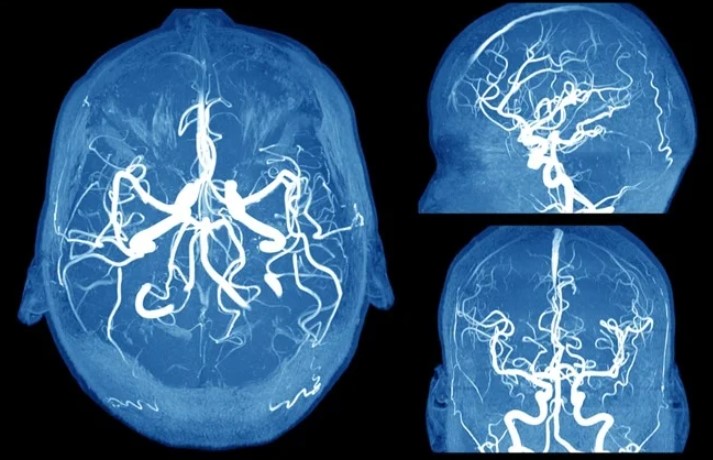
Introduction to Aneurysms Aneurysms are serious medical conditions characterized by the weakening of an artery wall, leading to a bulge or ballooning. They can occur in various parts of the body, including the brain, abdomen, and aorta. Understanding the causes, symptoms, and treatment options for …
Cannabidiol, also known as CBD, is becoming more popular as a way to aid recovery. Here’s an introduction to how it might benefit your players. By Robin Roy Krigslund-Hansen.
Cannabidiol (CBD), is a non-psychoactive compound derived from the cannabis plant. Nowadays, CBD is finally gaining popularity as a natural treatment for a wide range of health conditions, including recovery of muscle tissue, inflammation, pain management, improving sleep quality, and promoting overall muscle recovery.
Furthermore, CBD was even found to be an effective treatment for chronic pain, with very few adverse effects, according to a recent study published in the European Journal of Pain (EJP). This is discovery increasingly piques the interest of the rugby industry as many players do deal with chronic pain due to the countless hits they receive during their careers.
In that regard, incorporating CBD in either oil or pill form into your recovery routine as a rugby player can be a natural and efficient way to speed up muscle recovery, decrease inflammation, and better manage pain both during and after your playing career.
Nevertheless, even though CBD oil for athletes is a very promising supplement and something that could improve your days, we advise you to consult with a medical professional before beginning any new supplement regimen just for the sake of it. Here’s how it can help you in muscle recovery and help you cope better with the side effects of being a professional rugby player.
The Potent Anti-Inflammatory Effects Of CBD
Chronic inflammation can cause muscle soreness and slow recovery, which is especially problematic for active rugby athletes. Inflammation is a natural response to injury or overuse, but chronic inflammation can lead to muscle soreness and slow recovery.
Because CBD has proven anti-inflammatory properties, it can help reduce muscle soreness and inflammation, thus speeding up the recovery process and lowering the risk of injury. In addition, the cannabidiol may help reduce joint pain and stiffness, both of which are common complaints among rugby players. This may result in increased mobility and an overall improvement in performance on the field.
And while we’re at the anti-inflammatory effects of CBD products, medical studies have shown that the compound can also help reduce neuroinflammatory disorders. This, in turn, can help improve cognitive functions, focus, and concentration, all of which are essential factors for rugby athletes.
CBD Is An Incredibly Effective Pain Management Tool
Among other things, it has been demonstrated that CBD is an incredibly effective pain management tool for various types of pain, including soreness and muscle pain.
The ability of CBD to interact with the endocannabinoid system of the body, which plays a role in the regulation of pain perception, is the source of CBD’s pain-relieving properties. In that context, CBD can help reduce pain and inflammation, making it an effective tool for rugby players to use in treating muscle pain and soreness.
As a rugby athlete, incorporating CBD oil into a pain management routine can be a natural and effective way to reduce muscle pain and soreness. This will allow for faster recovery and improved performance while playing the game.
CBD For Improved Sleep And Muscle Recovery
Rugby players recovering from the physical demands of the sport must prioritize getting enough quality sleep, as this factor contributes significantly to the recovery of their muscles and their overall performance. CBD oil has been shown to improve sleep quality by lowering anxiety levels, enhancing levels of relaxation, and aiding in the regulation of the sleep-wake cycle in the body.
As a rugby athlete, getting enough sleep is essential for recovery and performance. Including CBD oil as part of your routine may be a natural and efficient way to improve the quality of your sleep and promote healing and recovery.
Final Thoughts
In conclusion, it has been demonstrated that CBD is an effective natural remedy for muscle tissue recovery in rugby players. Because of its anti-inflammatory effects, pain management capabilities, and capacity to improve sleep quality and muscle recovery, it is an invaluable addition to the recovery routine of any rugby athlete.
If you’re a player, don’t wait and talk to a medical professional about adding CBD oil to your diet. If you’re a coach, talk to your players and encourage them to at least consider the idea of adding CBD to their diets to enjoy the plethora of benefits this compound offers in muscle recovery.
Oxford scientists are to launch a major global trial to investigate whether cannabis-based medicine can treat people with psychosis or psychotic symptoms. Currently, cannabidiol (CBD) is only prescribed for a small number of conditions. In the UK, for example, these include rare, severe epilepsy, and …
Tuesday, December 13, 2022 Food and drug administration warning letters are absolutely nothing new in the hashish market. In simple fact, we in this article at Budding Trends have lined this subject a quantity of times (in this article, below, and here). Not resigned to participating in the hits, …
In a medical very first, researchers have shipped an enzyme into the womb to address a fetus’ scarce genetic ailment, encouraging head off heart and muscle problems. The lady, who can not make the enzyme on her personal, is now a seemingly nutritious 16-thirty day period-previous who has escaped the fate of two of her siblings. Each died from the exact same disease early in lifestyle.
This achievements paves the way for dealing with other genetic disorders in fetuses by infusing a necessary enzyme as a result of a expecting person’s umbilical vein, researchers conclude currently in their report on the toddler in The New England Journal of Medicine (NEJM). It is “an essential proof-of-notion work” and “a cornerstone to greater comprehension … the benefit of enzyme treatment prenatally,” states Yin-Hsiu Chien, a healthcare geneticist at Nationwide Taiwan College Clinic who was not involved with the exploration.
The woman in this examine, named Ayla, has Pompe condition, which benefits when a kid inherits from the two mothers and fathers a defective gene for an enzyme that breaks down glycogen, a variety of starch. The flawed gene success in minimal amounts of the enzyme, known as acid alpha-glucosidase (GAA), which makes it possible for glycogen to build up in muscle and cardiac cells, producing an enlarged coronary heart and muscle mass weak spot. Since 2006, the outlook for youngsters with Pompe has enhanced thanks to enzyme alternative therapy, which provides infusions of a artificial variation of GAA just about every 7 days or two setting up at birth or just after the condition is uncovered. But with Ayla’s form of Pompe, referred to as childish-onset, no GAA is designed and coronary heart problems starts in utero, before enzyme substitute can start off.
Pediatric surgeon Tippi Mackenzie’s group at the University of California, San Francisco (UCSF), wondered no matter if simply infusing GAA into the umbilical vein of a expecting human being could protect a fetus identified to have Pompe. The procedure would resemble in utero blood transfusions, routinely presented to fetuses with sure disorders. In utero enzyme alternative therapy seemed like “lower hanging fruit that had been missed,” Mackenzie suggests.
Furnishing the enzyme to a fetus may train its nonetheless-creating immune system to take the artificial protein fairly than make antibodies that block it, as babies getting GAA following beginning typically do. The enzyme must also access the brain a lot more conveniently, as the blood-mind barrier isn’t completely shaped early in fetal growth. That could aid protect against the mind hurt found with some other conditions the place the lacking protein is required by the central anxious program.
Two decades in the past, Mackenzie’s team examined the solution in mice with a disorder identical to Pompe, which is aspect of a group called lysosomal storage diseases that lead to the buildup of hazardous squander in cells. It labored, encouraging Mackenzie and collaborators to start a human demo. They enrolled a pair in Ottawa, Canada, who experienced two wholesome children but dropped two ladies to infantile-onset Pompe, together with a person who died regardless of enzyme procedure from delivery. When the mother, Sobia Qureshi, grew to become expecting once again with Ayla, fetal screening disclosed that she, too, had inherited two defective copies of the GAA gene from her parents and would have Pompe disease.
UCSF labored with Qureshi’s care workforce at the Ottawa Medical center and Children’s Medical center of Eastern Ontario to administer the enzyme six periods setting up at 24 months of being pregnant. When Ayla was born in June 2021, she showed no indicators of the heart complications noticed in childish-onset Pompe, the scientists report in NEJM. Ayla proceeds to receive enzyme treatment and has made generally, going for walks at 11.5 months.
Sobia Qureshi and Zahid Bashir lost two daughters to Pompe disorder just before they experienced Ayla.André Coutu/CHEO
Qureshi says in a video clip that owning a healthier youngster with Pompe “is totally incredible” immediately after shedding two young children to the disease. “She’s a wonder,” provides Alya’s father, Zahid Bashir.
As element of the same medical demo, the researchers expect to try the in utero approach on 8 different lysosomal storage health conditions, and they have previously administered enzymes to two more fetuses. All of the contributors will be intently adopted after delivery. Because the blood-mind barrier closes as children age, the enzyme treatment will inevitably halt reaching their brains, which could guide to hurt.
The researchers hope the in utero treatment will hold off the onset of these troubles until eventually the small children grow to be qualified for solutions that could be long-lasting, these types of as a stem cell transplant or gene therapies in medical trials, say Duke University University of Medicine medical geneticists and Pompe condition experts Priya Kishnani and Jennifer Cohen, who are collaborators on the trial and NEJM paper co-authors. “The hope is that if we can avert neurologic problems commencing in utero, we can halt development and with any luck , serve as a bridge,” they stated by e-mail.